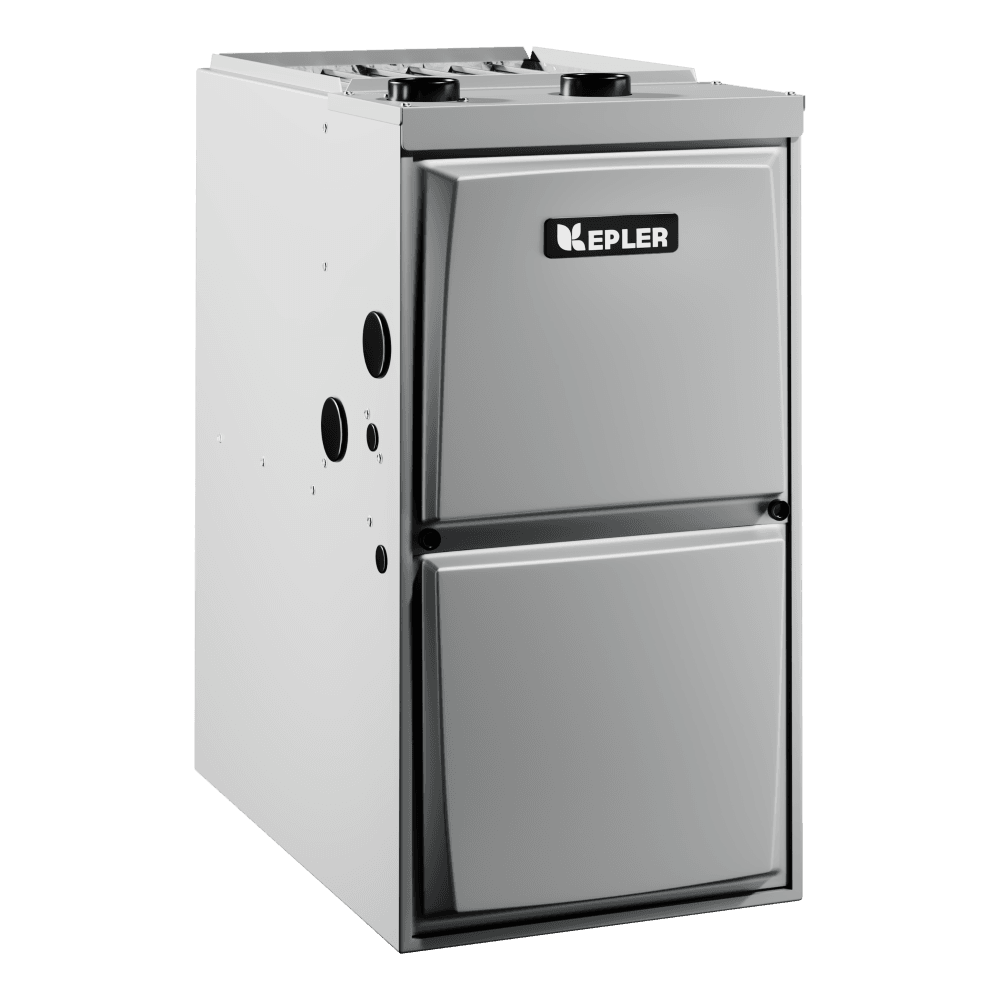
Bowmanville anchors the Municipality of Clarington at the eastern edge of Durham Region, a community where the GTA's suburban reach meets genuinely rural Ontario. This boundary position is reflected directly in the town's heating landscape: while newer subdivisions in west Bowmanville and along Green Road have natural gas service, many of the older properties in the historic downtown, along Liberty Street and Scugog Street, and in the surrounding rural areas rely on propane or oil heating. Some homes have been converted from oil to gas or propane over the years, but a surprising number still operate oil-fired furnaces or boilers—systems that are increasingly expensive to fuel, difficult to source parts for, and poor candidates for continued investment.
Understanding Bowmanville's mix of fuel types is essential for any HVAC contractor working here, and it's an area where Imperial Heating brings expertise that many city-based companies lack. Oil-fired heating systems are fundamentally different from gas furnaces in their maintenance requirements, failure modes, and upgrade pathways. An oil furnace requires annual nozzle and filter changes, produces soot that must be cleaned from the heat exchanger, and depends on a fuel delivery schedule that adds logistical complexity. When an oil system reaches end of life, the replacement isn't as simple as swapping in a new unit—the oil tank must be properly decommissioned, oil lines need to be removed or abandoned according to environmental regulations, and the heating infrastructure transitions to either gas, propane, or electric heat pump technology.
Bowmanville's housing stock tells the story of a town that has grown in waves. The downtown core and adjacent neighbourhoods along King Street, Church Street, and Temperance Street contain homes from the 1880s through 1960s—solid construction but built when heating oil was cheap and insulation standards were minimal. The original plaster walls, single-pane windows, and uninsulated basements in these homes mean that even a modern high-efficiency furnace will struggle to keep heating costs reasonable if the building envelope isn't addressed. The subdivisions that expanded the town through the 1980s and 1990s—around Waverly Road, Baseline Road, and the north end—brought natural gas connections and mid-efficiency furnaces that many homeowners are now replacing for the second time. The newest growth areas in west Bowmanville along Green Road and south toward the 401 corridor feature modern construction with gas furnaces and central air, typical builder-grade equipment.
For rural properties beyond the gas grid—and there are many surrounding Bowmanville, along concession roads and rural routes throughout Clarington—propane furnaces and oil boilers remain the primary heating method. The economics of these fuel types make heat pump conversion particularly attractive. A rural Bowmanville homeowner spending $3,500 to $5,000 per year on propane or oil heating can typically reduce that to $1,500 to $2,500 with a cold-climate heat pump, producing annual savings of $1,500 to $2,500.
Imperial Heating handles oil-to-heat-pump conversions that require decommissioning old oil tanks, removing oil lines, and installing entirely new heating infrastructure. We work with propane systems and understand the sizing considerations specific to propane-heated homes, where the burner characteristics differ from natural gas equipment. And for the majority of Bowmanville residents on natural gas, we provide the full range of furnace and heat pump services that our clients across the GTA rely on. Our technicians carry the diagnostic tools and parts needed for all fuel types, and they're experienced in the building styles and vintage equipment common in Clarington.
Bowmanville homeowners who have felt underserved by companies unfamiliar with their community's fuel diversity find in Imperial Heating a contractor who understands the full picture. Call (647) 852-2359 for honest HVAC service tailored to Bowmanville's specific needs.
Bowmanville homeowners should also be aware that the municipality of Clarington may have specific requirements for oil tank decommissioning and removal that go beyond provincial minimums. Underground oil tanks in particular require environmental assessments before they can be removed, and any evidence of soil contamination triggers a remediation process that adds time and cost. Imperial Heating has navigated these requirements on behalf of dozens of Clarington homeowners, coordinating with licensed environmental contractors when needed and ensuring that the decommissioning process is handled correctly from start to finish. For homeowners along Concession Road 3, in the Newcastle area, or throughout rural Clarington who are ready to get off oil heating, we provide a complete, worry-free transition path. Whether your property sits in the heart of Bowmanville's historic downtown, in the growing subdivisions along Longworth Avenue, or on a rural lot along Regional Road 57, Imperial Heating delivers the specialized knowledge and reliable service that Clarington homeowners need. Our 13-plus years of experience across the GTA includes extensive work in communities with mixed fuel types, and we bring that expertise to every Bowmanville project. We serve the entire Municipality of Clarington, including Courtice, Newcastle, Orono, and the surrounding rural areas.
AC service in Bowmanville has a rural-suburban character that separates it from the Toronto core. Homes south of Highway 2 toward Lake Ontario run into humidity issues driven by lake-effect moisture, and undersized or poorly maintained AC systems in that belt routinely fail to control indoor humidity even when they're hitting temperature setpoints. Oversized or undersized capacity is the single most common design problem we diagnose in Clarington AC calls. A 3-ton unit in a 1,400 square foot bungalow short-cycles constantly, wearing out the compressor while leaving the air clammy. Proper load calculation on replacement, rather than a like-for-like swap, often solves humidity complaints that a homeowner has been living with for years.
Common AC repair patterns in Bowmanville skew toward the older Orono, Newcastle, and rural Clarington housing stock. R-22 systems installed in the late 1990s and early 2000s are still widespread here, and the replacement conversation we have in Cliffside also applies along Liberty Street and Concession Road 3. Add in well-water and septic considerations for the truly rural properties north of Highway 401, and HVAC work sometimes intersects with broader mechanical system maintenance that urban contractors aren't set up for.
AC installation costs in Bowmanville run slightly lower than central Toronto for labor but sometimes higher for equipment delivery on rural properties. Standard 2.5-ton central AC installation for a Bowmanville suburban home runs $4,400 to $5,800. Homes with longer driveways or difficult condenser placement add $200 to $500. For the growing share of Clarington homeowners converting from oil to heat pumps, the all-in project including oil tank removal, electrical panel upgrade if needed, and cold-climate heat pump install typically runs $15,000 to $20,000 before rebates. Over the long term that is cheaper than staying with oil, given current fuel prices.
Response time from Toronto to Bowmanville is the honest conversation we have with every Clarington customer. Business-hours calls typically get same-day service with a 2 to 4 hour window. After-hours emergencies on weekends or late evenings may run 4 to 6 hours. We're transparent about this up front rather than promising urban-style response and underdelivering. For routine maintenance and planned installs, booking a week or two out is normal and helps us keep emergency slots available for the calls that truly can't wait. Call (647) 852-2359.
Last updated: September 2026