Scarborough is one of the largest and most diverse communities in Toronto, stretching from the Bluffs along Lake Ontario all the way north to Steeles Avenue. The housing stock across Scarborough tells the story of decades of suburban growth: the bungalows of Birch Cliff and Cliffcrest built in the 1950s, the split-levels and ranch homes of Agincourt and Malvern from the 1960s and 1970s, the townhome complexes of Rouge and Highland Creek from the 1980s and 1990s, and the newer infill developments scattered throughout. What ties most of Scarborough's residential areas together is a common HVAC reality: aging furnaces that are approaching or well past their expected lifespan, ductwork that has been accumulating dust and developing leaks for 30 to 50 years, and energy bills that keep climbing every winter as these old systems work harder to deliver less heat.
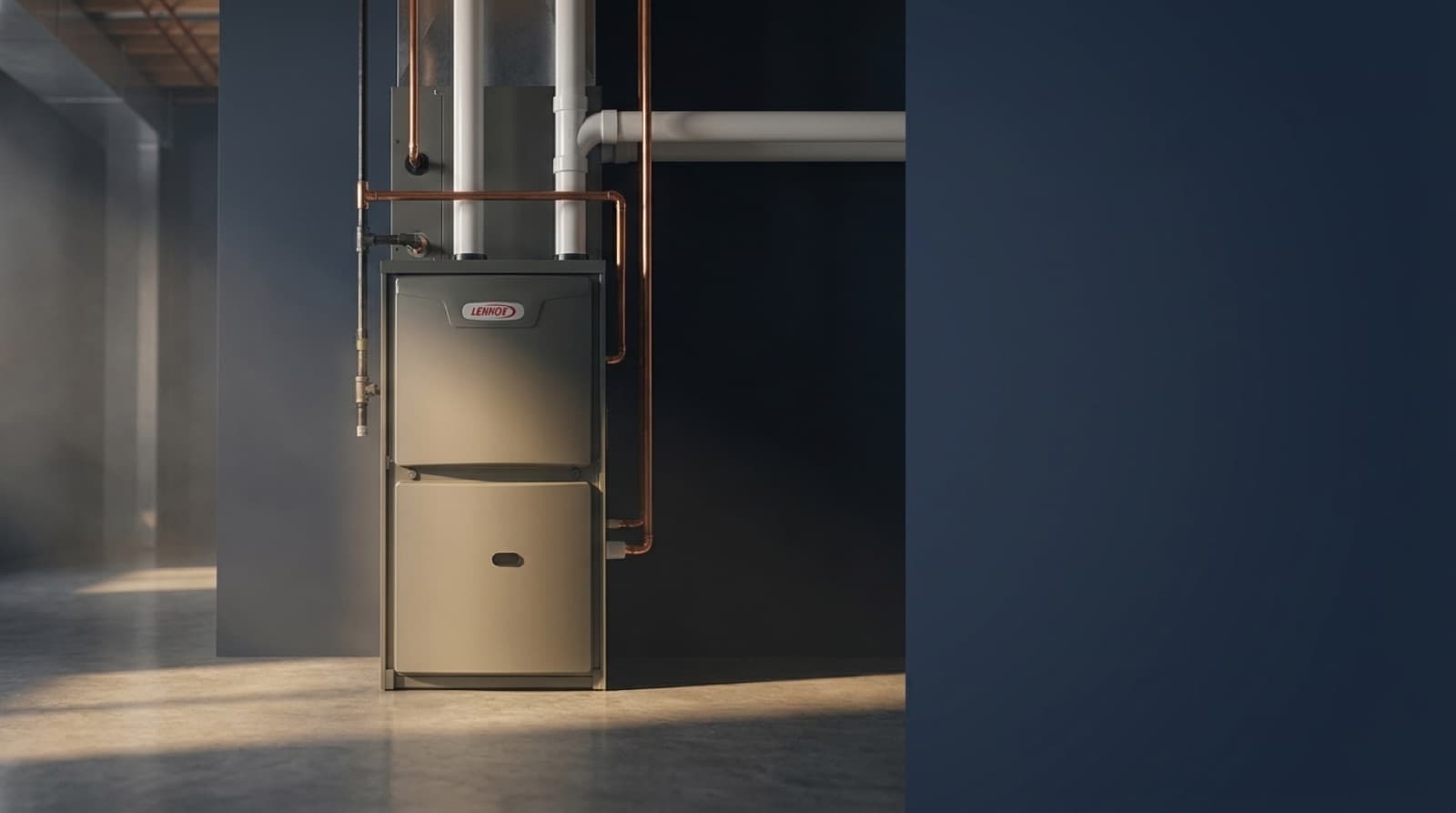
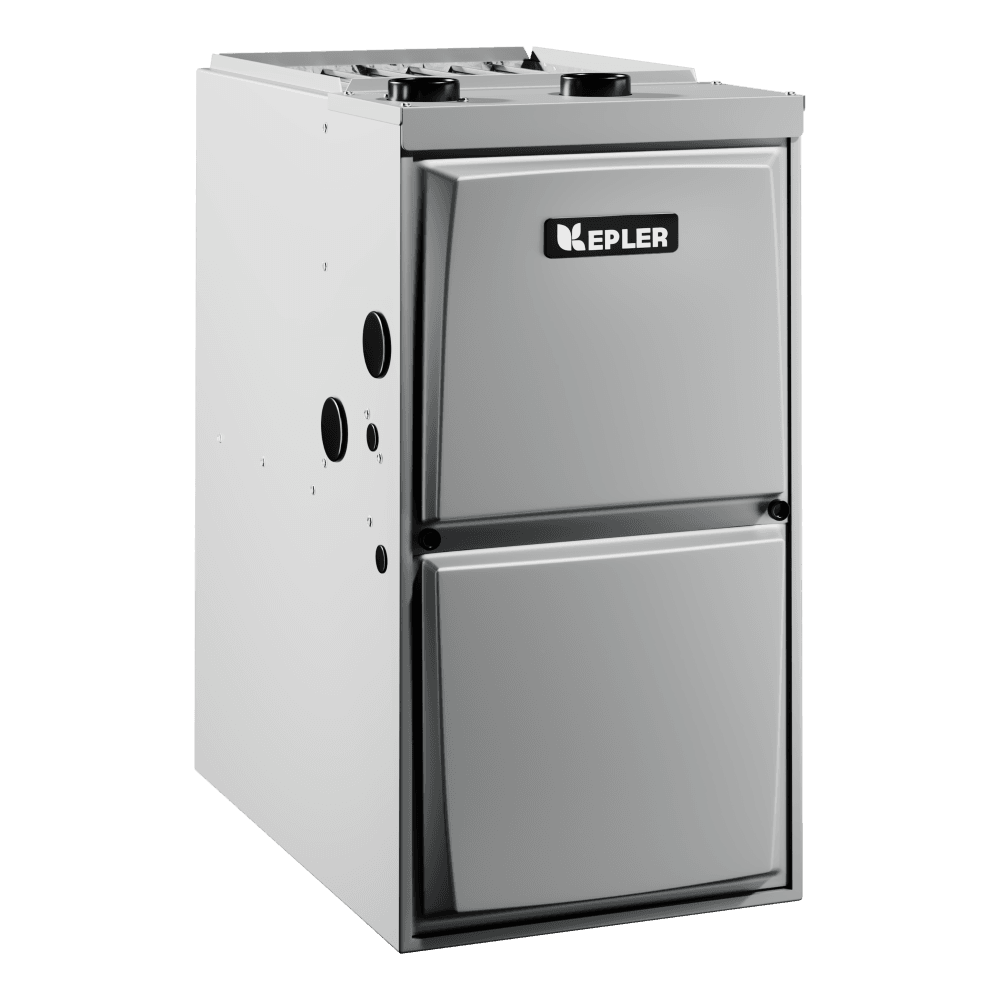
The typical Scarborough bungalow built between 1955 and 1975—and there are tens of thousands of them along streets like Kingston Road, Lawrence Avenue, Midland Avenue, and Markham Road—came equipped with a natural gas furnace that was replaced once, maybe twice, over the decades. Many homeowners in the Dorset Park, Woburn, and West Hill areas are now living with furnaces installed in the late 1990s or early 2000s that were considered high-efficiency at the time but have degraded significantly. A furnace rated at 92 percent efficiency when new might be operating at 75 to 80 percent after 20 years of service, consuming substantially more gas per unit of heat delivered. Multiply that efficiency loss by Scarborough's long heating season—November through April—and the cost difference between an aging system and a modern replacement can easily exceed $800 to $1,200 per year.
Scarborough's housing diversity creates specific HVAC challenges that vary by neighbourhood. The older bungalows in Cliffside and Guildwood often have original ductwork routed through the concrete slab—a design common in 1950s construction that makes duct cleaning and repair extremely difficult. Homes in the Kennedy Park and Ionview areas frequently have additions or enclosed porches that were connected to the existing heating system without proper load calculations, resulting in rooms that are always too cold in winter. The townhome complexes along Morningside and Military Trail present their own issues: shared walls that transmit noise from neighbouring furnaces, limited outdoor space for condenser units, and stacked layouts where upper floors overheat while lower floors remain cold.
Modern heat pump technology is transforming how Scarborough homeowners think about heating and cooling. A cold-climate heat pump can replace both the furnace and the air conditioner with a single system that heats efficiently down to minus 25 degrees and provides superior cooling in summer. For the typical Scarborough homeowner currently spending $2,000 to $2,500 per year on natural gas and $800 to $1,200 on air conditioning electricity, a heat pump can cut total heating and cooling costs by 30 to 50 percent. That's not marketing talk—it's the result of heat pumps delivering two to three times more heating energy than they consume in electricity, a fundamental efficiency advantage over any furnace that burns fuel.
A heat pump upgrade also replaces the air conditioner, provides better comfort, and delivers lower monthly operating costs for its entire service life.
Imperial Heating has deep roots in Scarborough, serving families across the M1 postal code area for over 14 years. We specialize in furnace diagnostics for the older systems common in Scarborough homes, emergency winter repairs when a furnace fails on a Saturday night, and smooth transitions from aging furnaces to high-efficiency heat pump heating. Our technicians know the specific furnace models, ductwork configurations, and building layouts that are prevalent in Scarborough's various neighbourhoods, and we maintain a parts inventory that lets us complete most repairs on the first visit.
Annual maintenance is one of the smartest investments a Scarborough homeowner can make, particularly for homes with furnaces over 10 years old. A $150 maintenance visit includes flame sensor cleaning, inducer motor inspection, heat exchanger visual check, filter replacement, and a full system performance test. These inspections catch the small problems—a cracking igniter, a worn blower bearing, a corroding flue connection—that turn into expensive emergency calls if ignored. For Scarborough families living in homes along McCowan, Brimley, or Ellesmere with equipment approaching the 20-year mark, annual maintenance extends system life, maintains safety, and gives you advance warning when replacement is on the horizon rather than discovering it at 2 AM on the coldest night of the year.
AC repair in Scarborough follows a predictable pattern every summer. The first real heat wave in June pushes 15 to 20-year-old central AC systems past their limit, and capacitor failures spike. A capacitor is a ten-dollar part that costs $180 to $280 installed by most reputable contractors, and it's the most common AC repair call we handle in Scarborough homes. The second common failure is the contactor, the electrical switch that starts the compressor. When contactor points corrode, the outdoor unit sits humming but never kicks on. That's a $180 to $240 job that takes a technician about 45 minutes on-site.
The more expensive AC repairs involve refrigerant. A significant share of Scarborough homes still have AC systems running on R-22, which has been phased out of new production since 2020. Topping up R-22 now costs $150 to $200 per pound, and a typical residential AC holds 4 to 8 pounds. When a Cliffside, Dorset Park, or Guildwood homeowner calls about warm-blowing AC and we identify an R-22 leak, the honest conversation is usually about replacement rather than repair. Pouring $800 to $1,200 into refrigerant that will leak again within a season doesn't make sense when a modern R-410A or R-32 system would cost $4,500 to $6,500 installed and run 30 to 40 percent more efficiently.
For AC installation, the biggest variable in Scarborough pricing is whether the ductwork already supports central air. Homes built with central heating but without AC, common in 1960s and 1970s Scarborough bungalows, can be retrofitted with central AC for $4,200 to $5,500 for a standard 2.5-ton system. Homes that replace both heating and cooling with a cold-climate heat pump run $10,000 to $14,000 before any rebate. For tight row houses in West Hill or units along Kennedy that lack room for ductwork, ductless mini-split systems are typically the right answer at $4,000 to $6,500 per zone installed.
Response time matters most on the hottest days. When a family in Malvern or Agincourt calls at 10 AM on a 32-degree day, the realistic expectation is a technician on-site within 2 to 4 hours, diagnosis within 20 minutes, and most common repairs completed the same visit. Our service trucks carry the capacitors, contactors, and fan motors that account for roughly 70 percent of summer AC repair calls, so most issues don't require a second trip. For larger repairs, compressor replacement, evaporator coil replacement, or full system changeout, we quote firm prices on the spot and schedule around the customer's availability rather than ours. Call us at (647) 852-2359 for straight answers and same-day service.
Most Scarborough homes are on natural gas, and plenty of them are still paying a monthly rental on a water heater the previous owner signed for. We install the Enbridge Sustain tank at $24.99 a month plus HST, which is $28.24 all in to start, with service and repairs included and nothing up front. It is not a flat rate: Enbridge can raise it once a year, on the anniversary of your start date, by 2.5% or CPI, whichever is greater. That, the buyout schedule and the rest of the terms are on our water heater rental page.
Last updated: September 2026