Shelburne sits at the northern edge of Dufferin County, roughly 90 minutes northwest of Toronto along Highway 10 and Highway 89. With a population of about 9,000 that has been growing steadily as families and retirees seek affordable alternatives to the GTA, Shelburne retains the small-town Ontario character that larger communities in the region have lost. Main Street still functions as a genuine town centre, neighbours know each other by name, and the surrounding farmland reminds you that this is rural Ontario despite the new subdivisions on the edges of town. That rural character extends to the HVAC reality: Shelburne's winters are genuinely cold, many properties are on propane rather than natural gas, and when your furnace fails on a minus 25 degree night, you need a contractor who will actually show up. Imperial Heating serves Shelburne and surrounding Dufferin County with the reliability this community demands.
Shelburne's housing stock divides cleanly into two categories. The older homes along Main Street, Owen Sound Street, and the residential blocks surrounding the town centre date from the early 1900s through the 1960s. These are predominantly frame and brick homes built during an era when Shelburne was a quiet agricultural service town. Many still have heating systems that reflect decades of patchwork upgrades—original gravity furnaces converted to forced air, ductwork squeezed into walls and floor cavities that were never designed for it, and furnaces that have been replaced two or three times without anyone addressing the underlying distribution problems. The ductwork in these homes is often the weakest link in the heating system: leaky joints, inadequate return air, and runs that snake through uninsulated crawl spaces, losing heat before it reaches the living areas. Imperial Heating evaluates the complete system when working on older Shelburne homes—not just the furnace box—because replacing equipment without fixing distribution problems is money poorly spent.
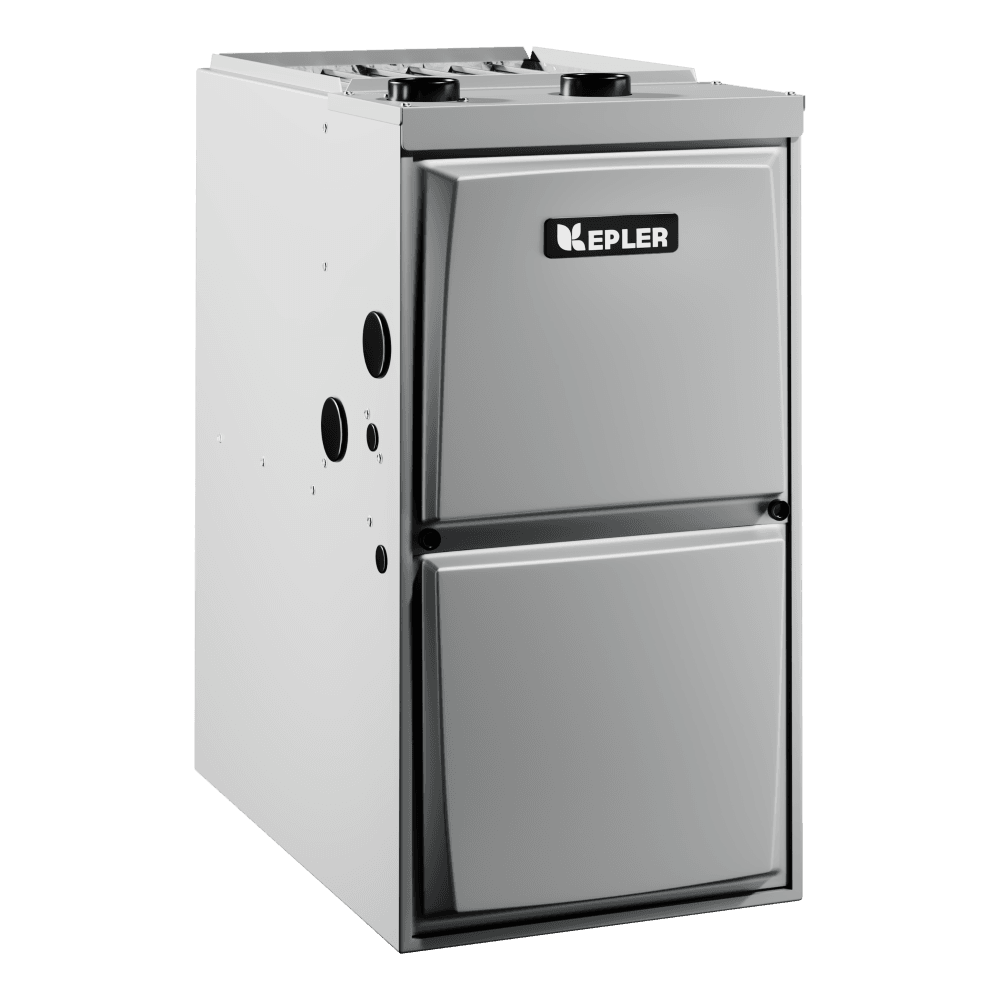
The newer subdivisions on Shelburne's east and south sides represent the town's recent growth. Developments along Robert Street, Jelly Street, and the areas extending toward the Highway 89 and Highway 10 intersection have added hundreds of homes over the past 15 years. These are predominantly two-storey detached homes and townhomes built by the same volume builders active across the GTA fringe. The equipment is builder-grade: single-stage furnaces, basic air conditioners, and thermostats that were current technology a decade ago. These systems are now entering their first serious maintenance window, with efficiency declining and components beginning to fail. For Shelburne homeowners in these subdivisions, the question is increasingly whether to replace the furnace with another furnace or to make the switch to a heat pump.
Shelburne's elevation on the Dufferin County highlands creates winter conditions that are notably harsher than communities at lower elevations. Overnight lows of minus 20 to minus 28 degrees Celsius are routine in January and February, and the exposed terrain means wind chill can push effective temperatures well below minus 30. The heating season runs from mid-October through late April—roughly six months of continuous furnace operation. That extended season puts significantly more wear on HVAC equipment than the same systems would experience in Toronto or Mississauga, making annual maintenance and proper equipment sizing essential rather than optional.
Many properties in and around Shelburne, particularly those along County Road 124, the Honeywood Road, and the rural areas toward Hornings Mills and Mulmur, rely on propane or oil rather than natural gas. Propane heating typically costs $4,000 to $5,500 per year in the Shelburne area, while oil heat can run even higher. A cold-climate heat pump can reduce these costs by 50 to 60 percent—real savings of $2,000 to $3,000 annually. Imperial Heating has completed numerous propane-to-heat-pump conversions across Dufferin County and handles every aspect of the project from equipment selection through installation.
Imperial Heating serves Shelburne and the surrounding communities of Honeywood, Hornings Mills, Mulmur, and the broader Dufferin County area. We also serve nearby Orangeville, Alliston, and the northern Dufferin towns, so our technicians are familiar with this region's climate and housing stock. Whether you need emergency furnace repair, a planned system upgrade, or annual maintenance to prepare for another Dufferin County winter, call (647) 852-2359 for honest, professional service.
Shelburne sits high. The town is up on the Dundalk Highlands at one of the higher elevations in southern Ontario, and that is not trivia. It is the reason heating loads here run above what the same house would need in Orangeville, twenty minutes down Highway 10. Wind is more or less constant on the open tableland, and the snow that closes Highway 89 most winters is the same wind driving infiltration through every gap in the building envelope.
The housing splits cleanly. The older brick and frame homes around Main Street and the streets off it are the town's original stock, and their problem is almost always the envelope. The subdivisions that went in through the 2010s brought a wave of builder-grade furnaces that are now reaching their first replacement, and their problem is equipment specified to a builder's budget. Those are two different conversations and we do not run them together.
Natural gas serves the town itself. Properties out toward Horning's Mills, Melancthon and Mulmur are more often on propane or oil, and those are the ones where a cold-climate heat pump genuinely changes the annual heating bill. We are roughly 90 minutes northwest of the shop, so Shelburne work is scheduled around the drive rather than promised on a two-hour window.
Wind is the variable we spend the most time on in Shelburne. On an exposed lot up here a house loses far more through infiltration than its square footage suggests, and a furnace sized off floor area alone will run continuously through a January blow and still leave the north rooms cold. We do a proper heat loss where it is warranted rather than sizing from a rule of thumb, and sometimes the right answer is air sealing before equipment.
Snow load decides equipment placement too. High-efficiency furnaces vent through a side wall, and a termination set at the code minimum height gets buried in a Shelburne drift by February. A buried intake shuts the furnace down on a safety at the worst possible moment. We set terminations high here and we show homeowners which stretch of wall to keep clear, which prevents most of the no-heat calls we would otherwise be driving up for mid-storm.
Last updated: September 2026