Tottenham is the second-largest community in the Town of New Tecumseth, located along Highway 9 between Alliston and Orangeville in the rolling agricultural landscape where Simcoe County meets Dufferin County. With a population of roughly 7,000 that has been growing steadily as new subdivisions fill in the edges of what was once a quiet farming village, Tottenham sits squarely in the zone where GTA commuters meet small-town Ontario. The community's position along the Highway 9 corridor gives residents access to Barrie, Orangeville, and the northern GTA within reasonable commuting distance, making Tottenham increasingly attractive to families looking for affordable homes and more space than the city can offer. Imperial Heating serves Tottenham and the broader New Tecumseth area with the same professional, no-surprises HVAC service we have delivered across the GTA for over 14 years.
Tottenham's older core, centred along Mill Street, Queen Street, and the residential blocks surrounding the village centre, contains homes that reflect the community's agricultural heritage. Built primarily between the 1890s and the 1960s, these properties are a mix of frame farmhouses, brick cottages, and modest bungalows typical of Ontario's rural villages. Many of these older homes have been through multiple heating system generations—from wood to coal to oil to natural gas—and each transition left behind ductwork modifications, abandoned flue connections, and mechanical room configurations that challenge modern installations. The ductwork in these homes is particularly problematic: undersized round pipe from the original forced-air conversion that restricts airflow, limits system performance, and creates rooms that are chronically cold while the area near the furnace overheats. Imperial Heating always assesses the complete heating system in older Tottenham homes, because a new furnace or heat pump can only perform as well as the ductwork and building envelope allow.
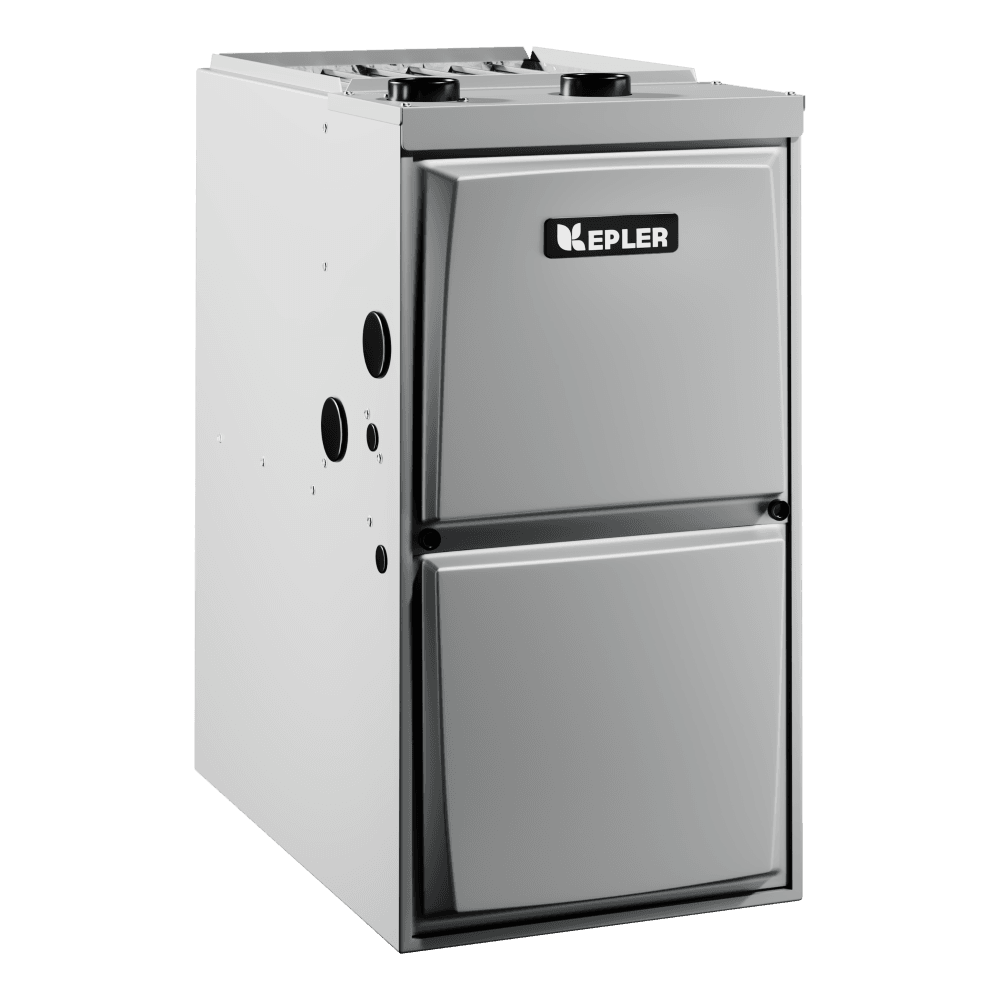
The newer subdivisions on Tottenham's east and south sides represent the community's recent growth. Developments along Industrial Road, the areas south of Queen Street toward the Beeton Road, and the residential phases extending along Highway 9 have added hundreds of modern homes over the past decade and a half. These are predominantly builder-grade two-storey detached homes and townhomes equipped with single-stage furnaces and basic air conditioning. The earliest of these homes are now approaching the 15-year mark, which means their original HVAC equipment is entering the zone of declining efficiency and increasing repair costs. For homeowners in these subdivisions who are seeing their gas bills climb and their furnace needing service calls for the first time, the replacement conversation is timely.
Tottenham's position between Alliston and Orangeville, at a slightly elevated position on the drumlin landscape of southern Simcoe County, gives it winter conditions that are distinctly colder than the GTA. Temperatures routinely drop below minus 20 degrees Celsius in January and February, and the exposed terrain between Tottenham and Beeton means wind is a constant factor that strips heat from buildings and forces furnaces to run harder and longer. The heating season here extends from late October through mid-April, adding roughly a month of continuous operation compared to central Toronto. That extra month of run time accelerates wear on every moving component in the heating system, making annual maintenance a smart investment rather than an optional expense.
Rural properties surrounding Tottenham—along the Tottenham Road, the 5th Line, and the farmland stretching toward Beeton, Cookstown, and Adjala-Tosorontio—typically rely on propane rather than natural gas. Propane heating costs for rural Tottenham-area homes commonly run $3,800 to $5,200 per year, depending on home size and insulation quality. Cold-climate heat pump conversion offers these homeowners the most significant cost reduction available. A heat pump running on electricity costs roughly one-third what propane costs per unit of heat delivered, translating to annual savings of $1,900 to $3,100.
Imperial Heating provides full HVAC service across Tottenham, Beeton, Alliston, and the entire New Tecumseth area. Our technicians also serve nearby Cookstown, Orangeville, and the surrounding Simcoe and Dufferin County communities, so we know this region's climate and housing stock well. Whether you need an emergency furnace repair during a cold snap, a heat pump installation for a growing family home, or a propane conversion for a rural property, call (647) 852-2359 for straightforward advice and reliable work.
Tottenham grew in waves, and you can date a furnace by the street it sits on. The older core around Mill Street West and Queen Street North holds houses built well before any subdivision, most with ductwork retrofitted into a building that never planned for it. The estate lots and the subdivisions that pushed north and west of the village from the 1990s onward are where we see builder-grade equipment reaching its first or second replacement, usually somewhere between years twelve and eighteen.
The Tottenham Conservation Area sits at the edge of the village, and the low ground around the pond is a real humidity factor for the homes closest to it. Basements down there hold moisture well into spring and again through the fall. That is why a properly sized air conditioner or heat pump matters more here than raw tonnage: a unit that runs long cycles pulls moisture out of the house, while an oversized one hits the setpoint, shuts off, and leaves the basement damp.
Tottenham is a commuter village. Highway 9 and Highway 27 put a large share of the population on a daily drive south into the GTA, so most of our bookings here land on evenings or Saturdays and we staff for that. Tottenham is about an hour north of the Don Mills Road shop and we do not pretend otherwise. You will get a real window on the phone, and if it is tomorrow rather than today we will say tomorrow.
Most Tottenham replacements we are asked to quote are builder equipment nearing the end of a first cycle, and the honest advice is often to wait. A furnace at year thirteen with a clean heat exchanger and a healthy inducer has years left in it. A furnace at year thirteen with a cracked exchanger is finished that day. We put a camera on the exchanger before recommending anything, and we tell you which one you have rather than leading with a replacement price.
The subdivisions here were built tight, which is good for the heating bill and bad for air quality if nothing is moving. Tottenham homes of that vintage often have a heat recovery ventilator nobody has touched since the builder installed it: filters furred over, core never washed, drain line dry. Cleaning it is a maintenance visit rather than a replacement, and it usually does more for how the house feels in February than any equipment change would.
Last updated: September 2026